
UK Fuel Protests: Pointless and Unlikely to Succeed
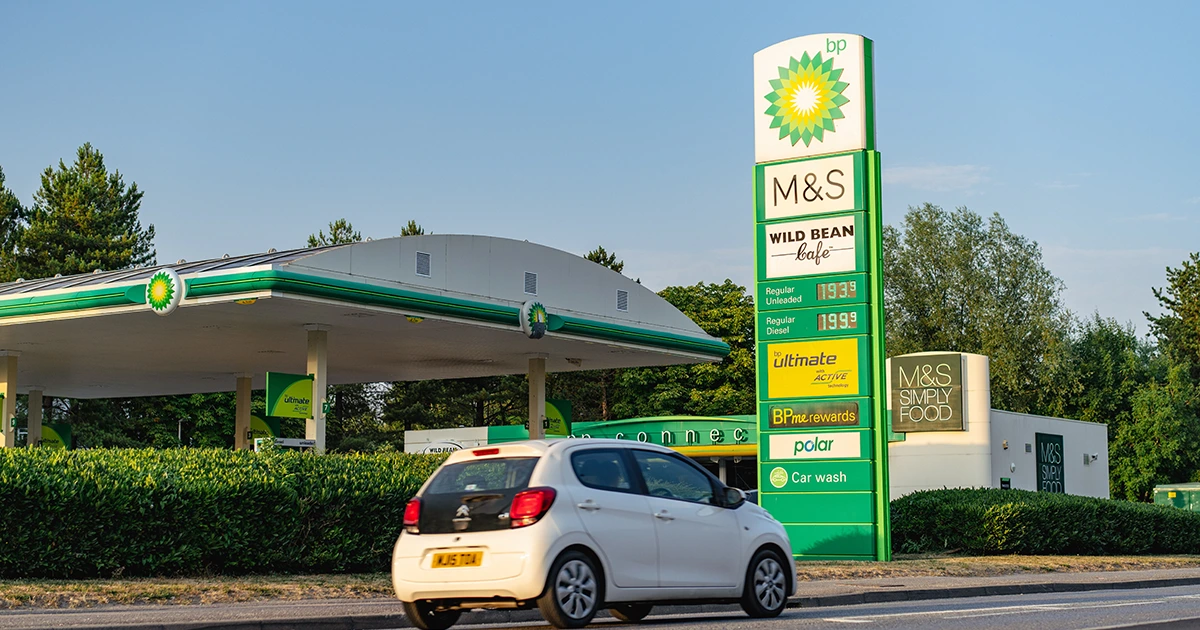
Why it's not wise to get involved in fuel protests - this time!
Following recent events in Ireland and across Europe over the past week, we would like to share our perspective on why fuel duty protests are unlikely to yield results this time. As a private business, we are no fans of high taxes or heavy government regulation. This article is not an attempt to enrage; rather, it aims to lay out the facts and prevent people from wasting time that could be spent more productively.
The Suspicious Suppression of European Protest News
Normally, we would point to stories of widespread fuel price protests across the water in Ireland - except those stories have been notably absent from mainstream news. It is highly likely they have been actively suppressed to prevent similar gatherings in the UK. To date, the best (and perhaps only) real coverage of these protests has been found on social media.
Ireland is similar to the UK in that a significant portion of the price of petrol and diesel is comprised of tax - roughly 50–60% of every litre. Prices in Ireland for diesel are hovering around €2.20, which is roughly equivalent to the UK price of £1.90.
Protesters on both sides of the Irish sea want their Government'sto reduce, or preferably remove, that duty so that prices will fall. On the face of it, this seems like a reasonable suggestion: remove £1 of duty from the £1.90 total, and prices should drop to 90p a litre - right?
Unfortunately, the answer is no. Not this time.
Why This Crisis is Different
The current situation differs significantly from the protests of the year 2000, led by individuals like Brynle Williams. Although there was a common view at the time that those protests "failed" because the government didn't immediately slash prices, they actually achieved a major strategic victory.
The Legacy of the 2000 Protests
Before the year 2000, the UK used a "Fuel Duty Escalator"—a policy where fuel duty automatically increased above inflation every single year. The 2000 protests broke that cycle. Following the blockades, the government became far more cautious about provoking motorists, leading to a decade-plus of duty freezes. In that sense, direct action saw real success.
However, while those protests changed the political landscape, the global landscape of 2026 is a different beast entirely.
The Reality of Finite Supply
What many overlook today is that we are no longer just fighting domestic tax policy; we are fighting global scarcity. Due to transit restrictions in the Gulf and the effective closure of key shipping lanes like the Strait of Hormuz, the amount of diesel and petrol available to the UK and Ireland is physically finite.
In 2000, there was enough oil; the argument was simply about how much the government took as a "cut." In 2026, the £1.90 price point is a market mechanism to prevent us from running out of fuel entirely. When supply is this restricted, the price rises to manage demand.
If the UK or Irish governments removed fuel duty today, the price would likely shoot right back up to the previous level almost instantly. Why? Because the fundamentals of supply and demand remain unchanged. The only real difference would be that petrol companies would pocket that extra £1 per litre as "market value" profit, while the taxpayer receives nothing for public services.
Taking to the streets and blocking roads will not change the price when you are competing for the same limited drops of fuel with the rest of Europe and the world.
Long-term Failures Require Long-term Solutions
In reality, very little can be done in the short term. The damaging path we are currently on began in the 1970s and 1980s. We closed our coal mines, transitioned our power stations to run on expensive imported gas, and shuttered our refineries. We are now entirely dependent on other countries to supply our diesel and jet fuel.
The Problem with Short-term Politics
This dependency requires fundamental political change planned over the next 40 years, not the next 40 hours. Unfortunately, UK political cycles operate in days, not decades. Governments often react to what is trending on social media rather than engaging in long-term strategic planning.
Without that long-term vision, no amount of short-term protesting will change the underlying infrastructure.
Don’t Be Used by Those with Ulterior Motives
It is vital to recognize that in times of crisis, "professional agitators" emerge on all sides of the political fence. These individuals would love nothing more than for the UK to "down tools" and take to the streets in mass protest.
While your frustration is genuine, you must ask yourself who truly benefits from the chaos. There are some who will be rewarded politically by civil unrest, and others who will find direct financial reward through the engagement and "clout" that conflict generates.
Don't Become a Pawn
Right now, these groups are looking for pawns. We strongly advise anyone thinking about spending their own limited money and precious time on these movements to consider the following:
The "Leaders" often have different goals: Many of the people pushing for these protests do not have your best interests at heart.
Your time is an asset: Wasting a day on a picket line in 2026 will not lower the price of a litre of diesel, but it will cost you a day's wages or a day of productivity.
The outcome is predetermined: As we have laid out, the global supply constraints mean that even a "successful" protest that forces a tax cut will likely result in the oil companies absorbing that margin, leaving you in the same position you started.
Just be careful not to be used. In a crisis, your most valuable resources are your time and your focus. Don't hand them over to people who are simply looking to further their own agendas at your expense.
Conclusion
We regret being the bearers of bad news, but fuel protests are not going to provide a "quick fix" for this crisis. We are all currently paying the price for failed energy policies dating back forty years.